From the bespoke shoe workshop in Hollywood to the fashion house in Florence: the growth of a production — and a lesson in brand identity that begins with a photograph of Audrey Hepburn.
Estimated annual production
Milestone
1915
1930er
1950er
1970er
1990er
Today
Via dei Tornabuoni 14 — an Encounter with a Brand
Of course I had to visit the Ferragamo flagship store in Florence. What began as curiosity turned into one of the clearest brand experiences I have ever had — and a small lesson in how brands actually come into being.
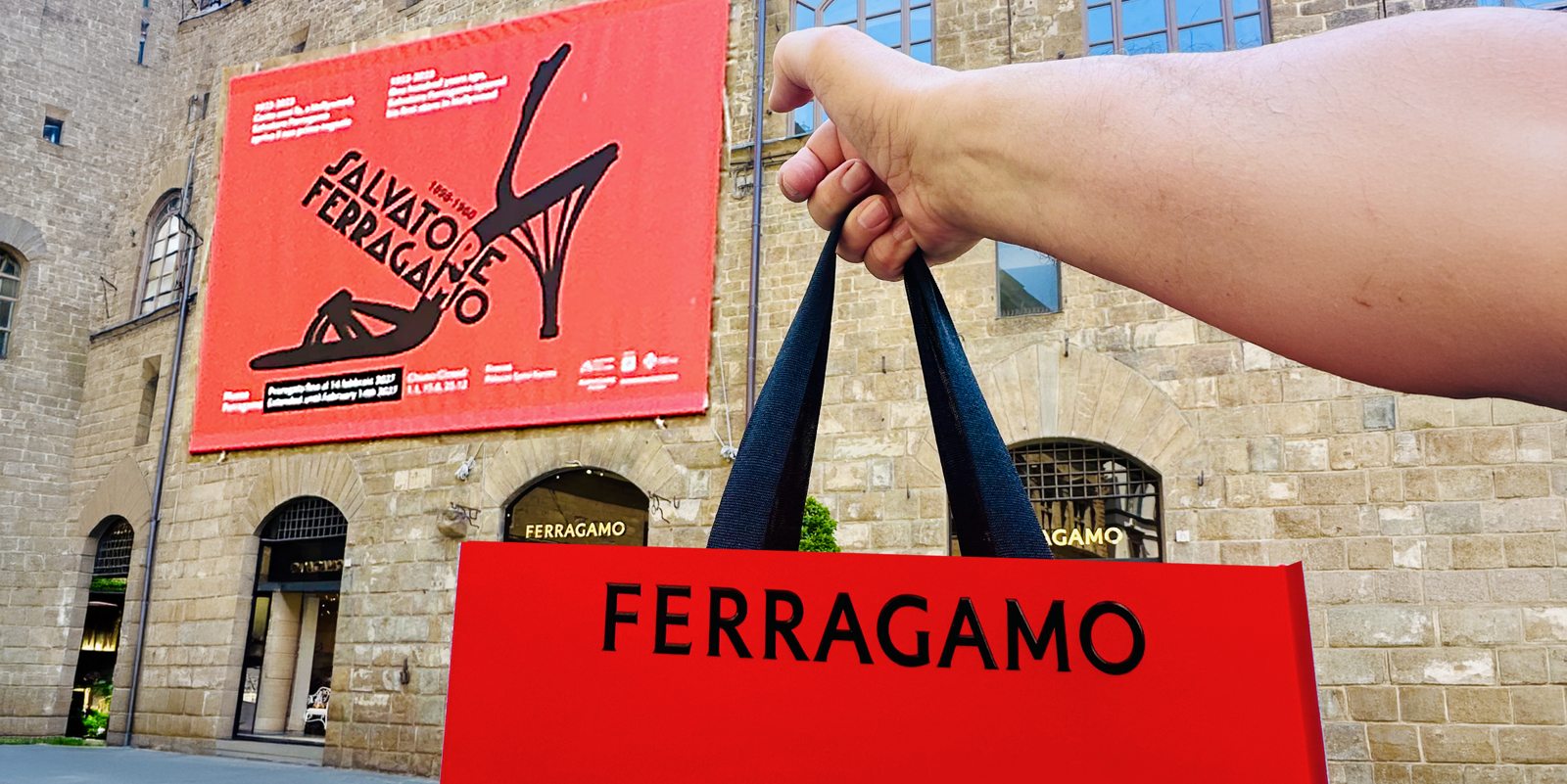
The Palazzo Spini Feroni on the Arno — company headquarters since 1938, today museum and flagship store in one. Hover over the images to zoom.
The curve above shows what grew inside this house over a century: the estimated annual production of Ferragamo goods — from a few hundred handmade pairs in Hollywood to the millions of items of a global fashion house. But the real story lies not in the number; it lies in a name.
From a Cobbler’s Boy in Irpinia to a Global Name
A biography like an American dream — only with Italian craftsmanship as its foundation.
Bonito, 1898 — a Boy Who Understood Shoes
Salvatore Ferragamo was born in 1898 in Bonito, a small village in the Irpinia region of southern Italy. He made shoes as a child; at nearly seventeen he emigrated to the United States — already an accomplished shoemaker.
Hollywood — Shoes for the Stars
To dress the feet of the film world is to dress its dreams.
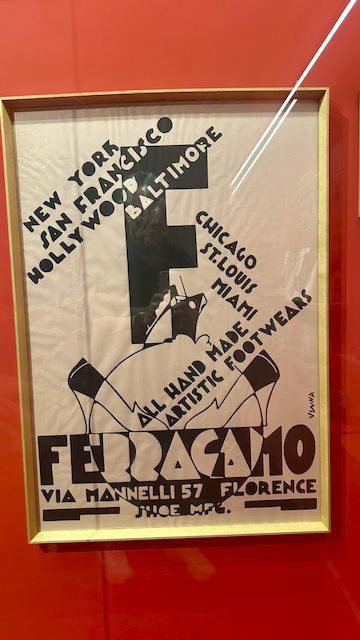
An early advertising poster: “All Hand Made Artistic Footwears.” New York, San Francisco, Hollywood — even then the name travelled the world.
Within a few years he became famous — first in Santa Barbara, then in Hollywood, where his Hollywood Boot Shop made bespoke shoes for the rising stars of cinema. To achieve the perfect fit he even attended university lectures on the anatomy of the foot. Mary Pickford, Gloria Swanson, Joan Crawford, Rudolph Valentino — they all had him make their shoes. The name Ferragamo became a byword for quality, original design and a perfect fit.
Florence — the Human Chain
In 1926 Ferragamo returned to Italy and settled in Florence. Here he built a company that, thanks to some 750 shoemakers, produced over 350 pairs of shoes a day — a “human chain” turning out exclusive shoes in series without giving up handwork. He experimented with unusual materials — fish skin, straw, cork — and patented models that made shoe history, above all the wedge heel.
Palazzo Spini Feroni & the Great Inventions
A palace on the Arno, an award as the first Italian — and a heel Marilyn made famous.
In 1938 Ferragamo rented a few rooms in the Palazzo Spini Feroni; soon after he bought the entire palace, which remains the company’s headquarters to this day. In 1940 he married Wanda Miletti, with whom he had six children. After the war his shoes became a symbol of Italy’s reconstruction.
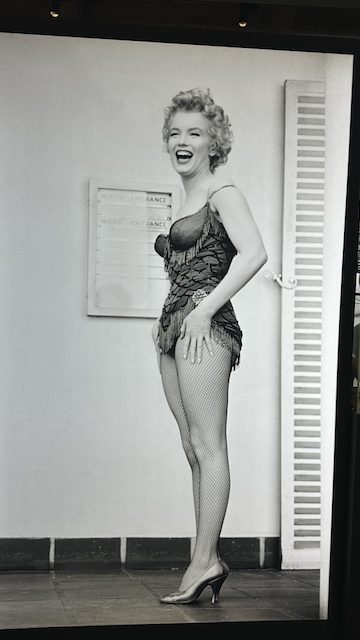
The stiletto heel — made famous by Marilyn Monroe. One of Ferragamo’s legendary inventions.
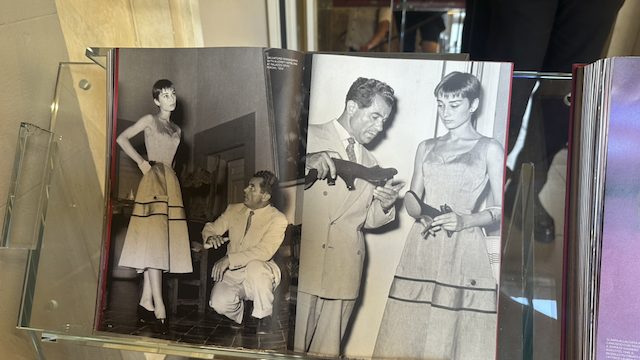
Ferragamo at a fitting with Audrey Hepburn — craft as a personal service to the client.
These were years of memorable inventions: the Invisibile sandal with an upper of nylon thread, for which he received the Neiman Marcus Award in 1947 — the “Oscar of the fashion world,” awarded for the first time to an Italian and to a footwear designer. Then the stiletto and the sandal made of 18-carat gold.
1960 — the Dream Fulfilled, the Fashion House Begins
When Salvatore Ferragamo died in 1960, he had realised the great dream of his life: to create the most beautiful shoes in the world. To his family he left the task of fulfilling the second dream — turning the company into a great fashion house. And that is exactly what happened: the shoemaker became a global brand for bags, ready-to-wear, accessories and fragrances.
Today — FERRAGAMO
In 2022, to modernise the brand, the company was renamed from “Salvatore Ferragamo” to “Ferragamo” and received a new logo ahead of the SS23 show. Today the house generates revenue of around €1.16 billion and operates roughly 447 mono-brand stores worldwide — shoes remain the core business at about 45 percent of revenue, leather goods follow at around 40 percent. The boy from Bonito has become an institution.
The Moment a Brand Is Born
No claim, no campaign. Just a man, a shoe — and someone who feels the difference.
An old photograph hangs in the store, and it floored me. Ferragamo is explaining a shoe to the young Audrey Hepburn. He holds it; she looks. Not politely — really. The man put his name on his product, quite literally. And it still works today because back then he did not merely communicate — he could actually do it: craft, anatomy, material. He knew the foot better than most doctors.
No claim, no campaign. Just the quiet conviction that a shoe that pinches is not a beautiful shoe.
I believe this is the real heart of everything when it comes to brands: the pioneer’s name vouches for it. Ferragamo did not yet know he would become a brand. But whoever puts their name on it stands behind it. And Hepburn in the picture is no testimonial — she genuinely grasps what he is showing her. Perhaps brands are born precisely there: in the moment quality meets someone who feels the difference.
Via dei Tornabuoni 14 — My Brand Experience
Tried size 48 for fun, found a fit at 46.5 — and suddenly understood what Ferrari can’t manage.
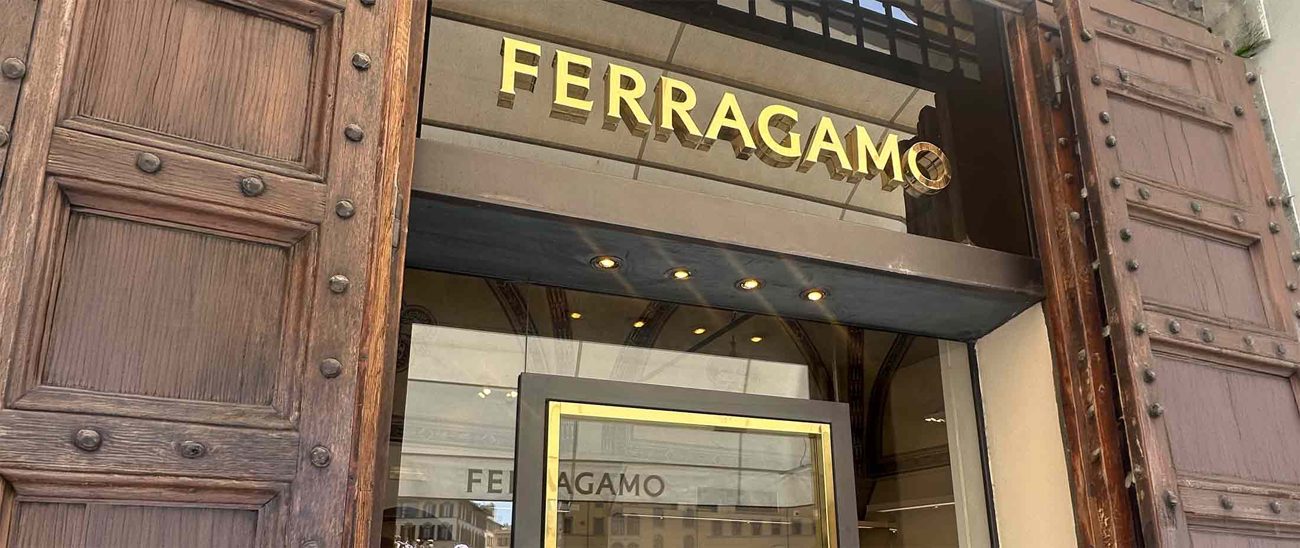
The flagship store on Via dei Tornabuoni, Florence — golden letters, heavy wooden doors, a quiet presence.
In the flagship store I had a lovely conversation with a senior salesman about the “tall men from north of the Alps” who only make Italian designers shake their heads. But: for fun I asked about my size — and started trying at 48, my sneaker size.
I found my fit at 46.5. I was astonished and asked myself: why does Ferragamo manage this and Ferrari doesn’t? It was a wonderful brand experience — not least because of that excellent salesman.
The contrast with the Ferrari story could hardly be greater: there my size-48 foot jams between the pedals and the dream crashes into reality. Here, at Ferragamo, the same body size becomes not a disqualifier but a fit. Two Italian icons, two completely different answers to the same question: who is the brand made for?
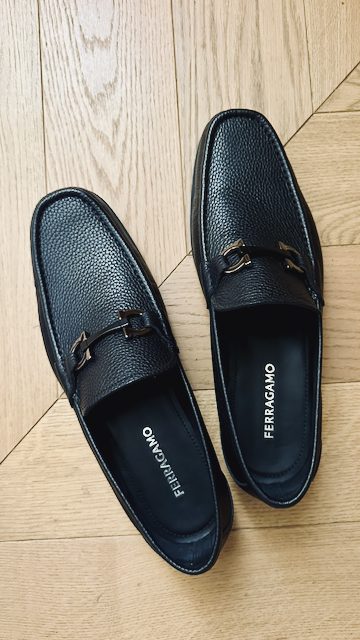
Lucky owner of two pairs of Ferragamo loafers — quiet luxury to wear.
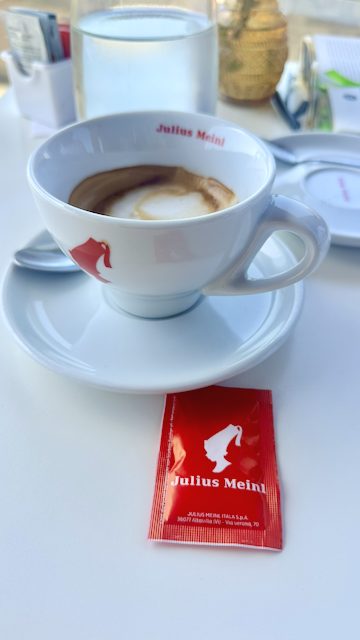
Julius Meinl — a brand the likes of which will never exist again.
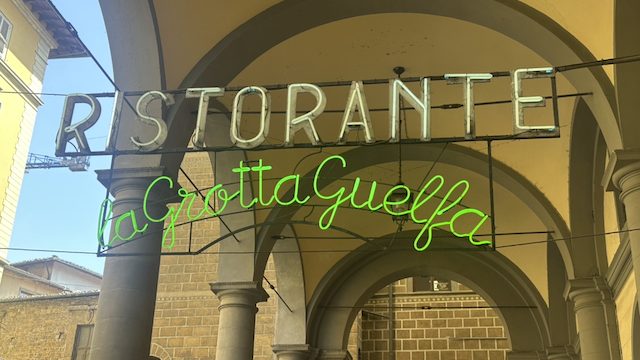
Ristorante La Grotta Guelfa in the ancient Palagio dei Capitani di Parte Guelfa, Via Pellicceria — after the Guelphs’ victory in the 13th century, seat of the “Capitani” who administered the confiscated property of the defeated. To this day this corner of Florence has kept its medieval character.
So now I am the lucky owner of two pairs of Ferragamo loafers in which — spoilt by Nike’s super-soft comfort galoshes — I walk not quite perfectly, but well enough. And I redeem the brand promise of exclusivity and restrained, quiet luxury whenever it pleases me. It was worth it to me.
What Ferragamo Teaches About Brands
A textbook case in brand theory — truly.
For me, Ferragamo is a textbook case in brand management. Not because of the campaigns, but despite their near-total absence at the start. The brand identity arose from the product itself: from a shoe that doesn’t pinch, from a name that vouches, from a craft you feel before you can name it.
What makes the brand? At Ferragamo the answer is uncomfortably simple: competence lived, not claimed. The pioneer puts his name on the product and stands behind it — and a century later that name still carries. This is not a communications strategy in today’s sense. It is its origin.